1. Choose the job the film needs to do
An asset introduction, a contractor capability film and a project documentary answer different questions. Choose the main purpose before deciding the running time.
For a capability film, viewers need to understand the company’s role and relevant experience. For a documentary, they may need to follow how the work progressed. An engineering audience may need detail that a general business audience does not.
2. Map the operation before making the shot list
Ask a project specialist to explain the sequence in plain language. Mark the main stages, the equipment involved and which activities cannot be repeated. A shot list then turns that account into the images the crew needs.
Plan the operation and the images together
- 01Map the work
Confirm the actual project sequence.
- 02Match the footage
Identify coverage for each stage.
- 03Check the meaning
Review terminology and shot order.
- 04Shape the story
Keep the sequence clear for the audience.
Use this as a planning aid. Agree the actual approach with your project team.
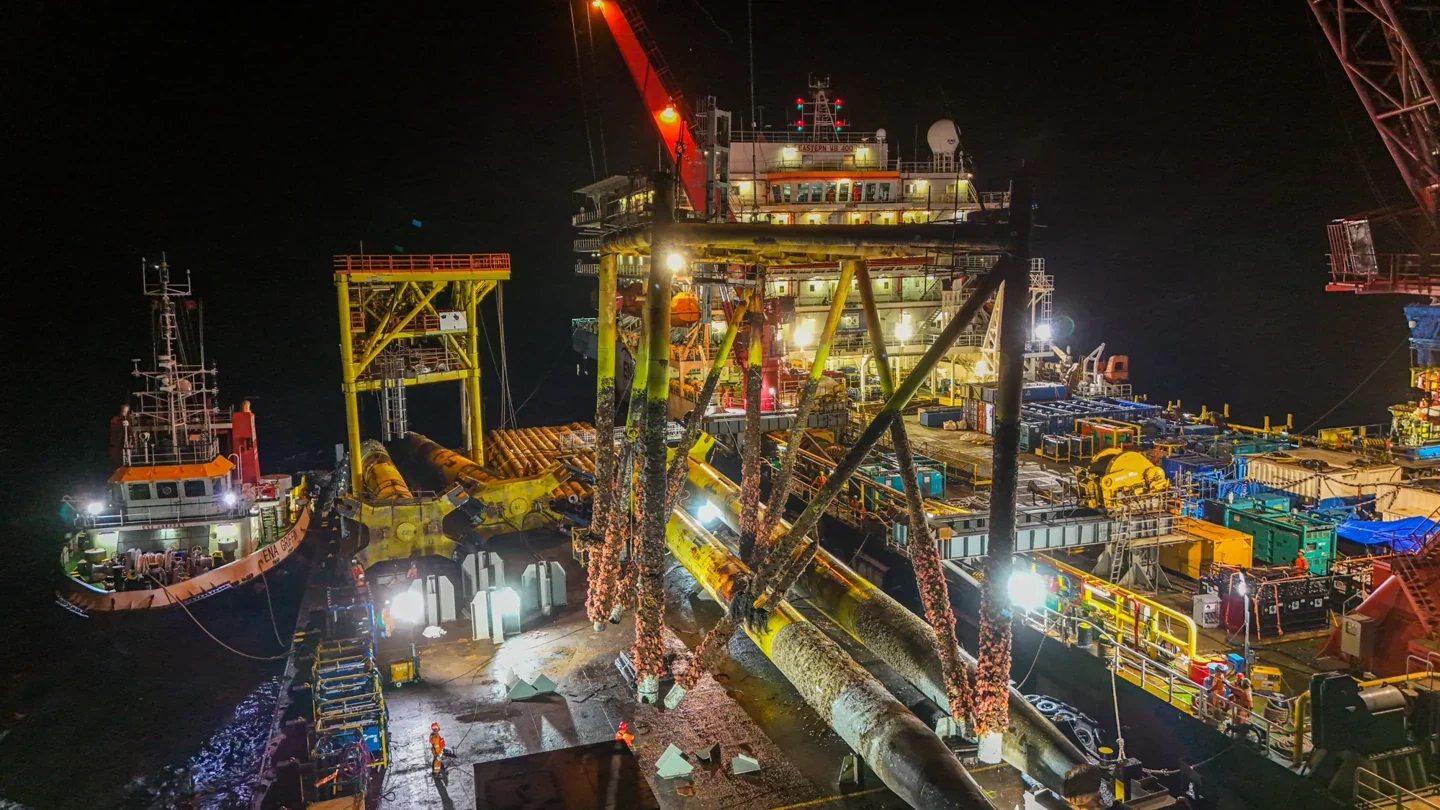
The T7 ELISE MOPU project involved a mobile offshore production unit: a movable offshore facility used to process production. The film needed to place the unit in its project context, supported by coordination, technical comments and version review.
The operation shapes the coverage
Scale, sequence and the work in between.

3. Check the meaning of the images
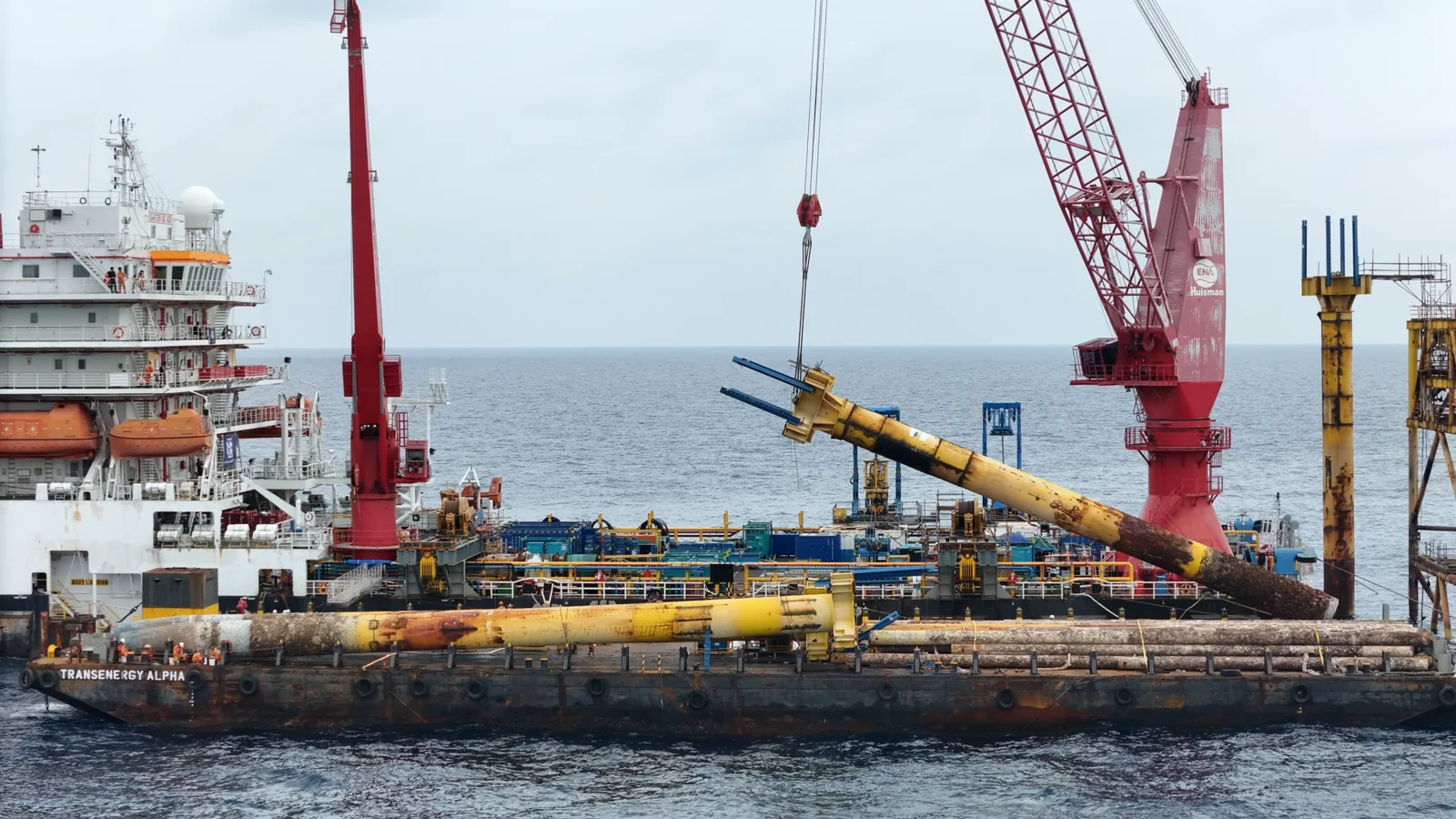
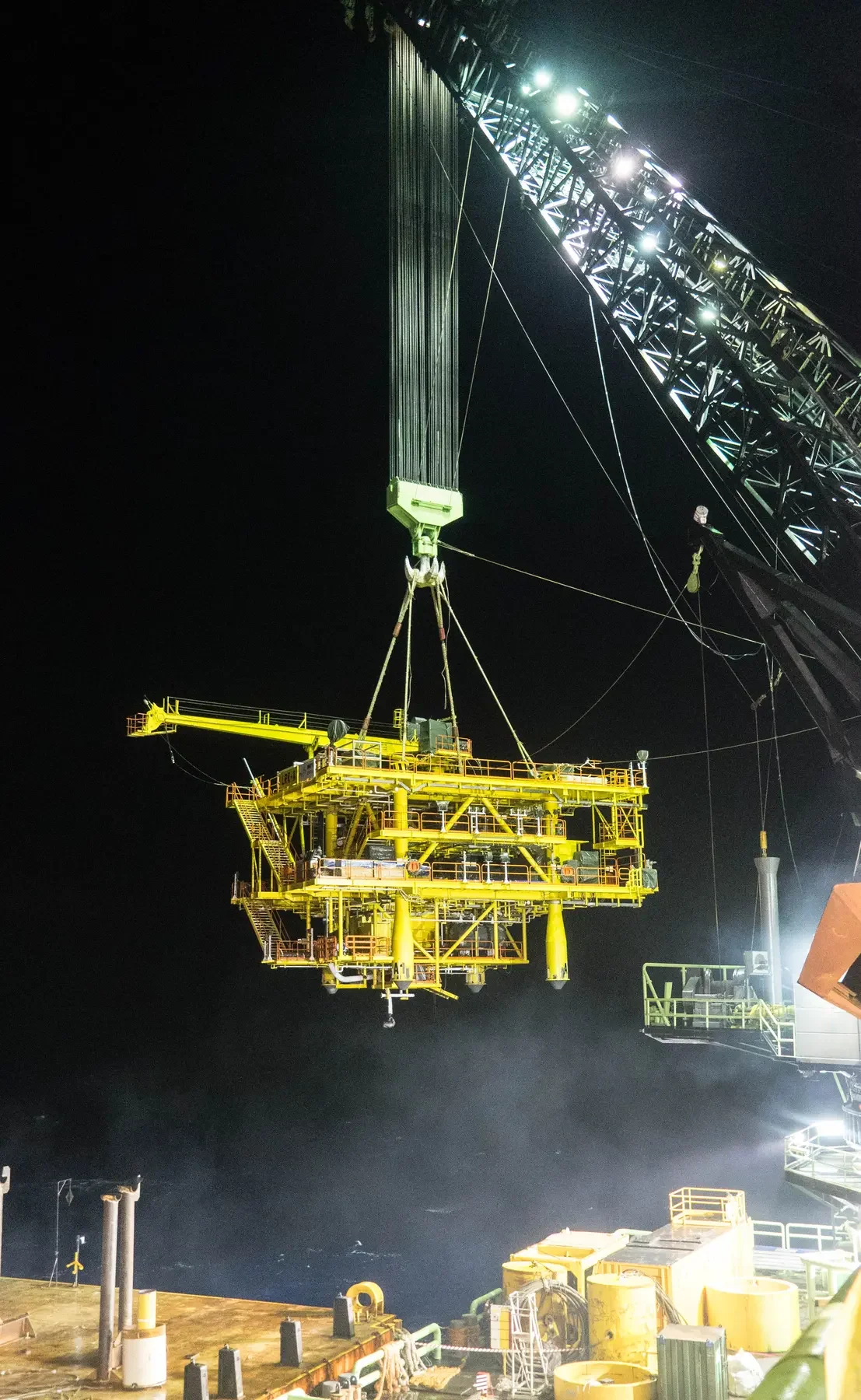
An attractive shot can become misleading when placed in the wrong sequence. In the Marine Masters documentary review, operational order and terminology mattered. A topside resting on a barge means something different from one still suspended during a lift.
See the Marine Masters documentary approach.
Use a simple footage log: project, date, location, activity, source and permitted use. Ask a technical reviewer to check the edit as well as the script. Correct words cannot fix a contradictory picture.
4. Plan access and a fallback
Confirm the filming window, crew access, permissions, inductions and the person authorised to make site decisions. The filming plan must fit the operation. The camera crew should not direct operational work.
| Material | Check before relying on it |
|---|---|
| New filming | Access, timing, permits and the site decision owner. |
| Existing footage | Correct project, date, activity, quality and rights. |
| Diagram or animation | Technical accuracy, labels and specialist approval. |
If a key activity happens earlier than expected, decide who will tell the production team and whether approved archive footage or a diagram can explain it. Agree the alternative while there is still time to prepare it.
5. Give sustainability footage a specific purpose
If the film supports environmental, social and governance communication, write down the exact point being made. Then check what evidence supports it. Offshore activity alone does not prove reduced emissions or an environmental benefit.
For Marine Masters, the stakeholder discussions included footage for PETRONAS’ ESG branding and messaging. That tells us the communication purpose. Any statement about environmental performance still needs its own approved evidence.
6. Prepare the filming and review brief
Ready to brief your producer?
- Purpose, audience and intended use of the film.
- Project stages and the company’s exact role.
- One-time activities and likely filming windows.
- Available archive with dates, context and permissions.
- Access requirements and the authorised site contact.
- Technical reviewer and person consolidating feedback.
- Required versions, languages and delivery dates.
Share the brief and the material already available. A producer can then assess the coverage needed, identify gaps and propose a filming approach that respects the project’s operating conditions.
7. Qualify the agency and the people who will mobilise
A good offshore showreel answers only part of the buying question. Ask how the agency will get the assigned crew to the site, work within the operator’s controls and preserve technical meaning in the finished film. Request evidence for the named crew and the planned travel dates, including any substitute personnel.
Tropical Basic Offshore Safety Induction and Emergency Training (T-BOSIET), Helicopter Underwater Escape Training (HUET), Compressed Air Emergency Breathing System (CA-EBS) training and Travel Safely by Boat (TSbB) describe related but distinct training elements. Confirm the exact certificate and course combination accepted for your route and installation. Do not assume a helicopter course automatically covers boat transfers.
The relevant training can address offshore safety induction, helicopter safety and escape using the specified breathing system, sea survival and emergency first aid, firefighting and self-rescue, with boat-travel training added where required. OPITO explains BOSIET and HUET here, and publishes a separate TSbB Initial Training standard. Use the operator’s current mobilisation checklist to settle what applies.
Bring these to your agency meeting.
Ask for an answer, supporting evidence and an owner for every requirement that applies.
- 01
Relevant offshore work
Can you show comparable assignments and explain exactly what your crew produced?
Ask for project context, filming role, delivery scope and an appropriate reference; separate a client’s archive from new filming.
- 02
Named crew and replacements
Who will actually travel, and what happens if a crew member becomes unavailable?
Request the proposed roster and a substitute-crew plan with equivalent checks.
- 03
T-BOSIET and refresher status
Do the assigned personnel hold the accepted Tropical BOSIET or refresher certificates for the full mobilisation window?
Check course variant, training provider, certificate authenticity and expiry against the operator’s requirements.
- 04
HUET and CA-EBS
Does their helicopter-escape and breathing-system training match the planned helicopter transfer?
Check the exact certificate combination; an EBS reference should not be assumed to mean CA-EBS.
- 05
Travel Safely by Boat
Is TSbB training required for this transfer, and has each travelling crew member completed the accepted course?
Confirm initial or further training and the actual transfer method. Ask about supplementary training if the operator specifies it.
- 06
Medical fitness and acceptance
Which medical assessment will the operator accept, and is each person cleared for the assignment dates?
For a PETRONAS/MPM requirement, confirm the required Approved Medical Examiner (AME) route. Ask whether an Occupational Health Doctor (OHD) assessment meets the stated requirement; do not assume AME and OHD status are interchangeable.
- 07
PCSB PTW assessment
Where PETRONAS Carigali (PCSB) applies, what PTW awareness, assessment or appointment is required for each proposed role?
Obtain the asset’s current requirement and evidence of accepted role-specific status. A training certificate alone is not a live work permit.
- 08
Site induction and additional training
What inductions, safety passports and hazard-specific training are required at this asset?
Confirm with the operator; requirements may vary for H2S awareness, working at height, marine access and restricted areas.
- 09
Filming risk assessment
Who prepares the filming method statement and JSA, and who accepts them?
Ask how tripod placement, cables, batteries, manual handling, vessel movement and changing conditions will be addressed.
- 10
Camera and equipment acceptance
How will cameras, lights, radios, batteries and accessories be cleared for the planned areas?
Request an equipment list for the site authority to assess against hazardous-area and ignition-source controls.
- 11
Operational interfaces
How will filming fit lifting, SIMOPS, deck movement and exclusion-zone controls?
Ask who coordinates with operations and who can stop or relocate the filming activity.
- 12
Drone feasibility
Is drone filming permitted, and who obtains the relevant flight and site approvals?
Confirm the responsible pilot/operator, approval lead time, exclusion areas and a practical non-drone alternative.
- 13
Travel and mobilisation
Who owns manifests, work permissions, baggage, kit limits, accommodation and booking cut-offs?
Request a responsibilities list and readiness date, including jurisdiction-specific requirements where applicable.
- 14
Weather, standby and fatigue
How are weather delays, offshore standby, crew rotation and working hours planned?
Agree the commercial treatment and operational decision owner before mobilisation.
- 15
Irrepeatable activities
How will the crew capture a critical event if its timing moves?
Ask for the communication chain, coverage priorities and an approved fallback for missed footage.
- 16
Technical literacy
Who checks asset names, equipment functions, sequence and terminology?
Ask the agency to explain a previous technical review and how it logged and resolved comments.
- 17
Data security and backup
How will sensitive footage be backed up, transferred and restricted offshore?
Agree approved storage, transfer channels, access permissions and retention; check bandwidth assumptions.
- 18
Footage and publication rights
Who may use the material, and which operator, vessel or subcontractor approvals are needed?
Distinguish ownership, permitted reuse and publication clearance, including third-party archive material.
- 19
ESG evidence
How will the agency distinguish a compelling sustainability image from a substantiated environmental claim?
Request a claim-to-evidence check and the named technical or sustainability reviewer.
- 20
Delivery and accountability
What deliverables, review rounds, insurance and handover arrangements are included?
Ask for agreed versions, limitations, change costs and coverage applicable to the actual offshore assignment.
8. Turn readiness into a mobilisation decision
Keep a named-person readiness matrix: crew role, accepted training, expiry, medical clearance, site induction, permit-system role, documents submitted and operator acceptance. Ask for the fitness conclusion and restrictions relevant to mobilisation through the proper channel; full personal medical records do not belong in a general production pack.
Four checks before mobilisation
- 01People
Named crew, accepted training and current medical clearance.
- 02Permission
Site access, assigned PTW roles and filming/equipment approvals.
- 03Production
Operational interfaces, event coverage, travel and backup arrangements.
- 04Acceptance
The operator confirms readiness for the planned scope and dates.
PurplePerfect’s ELISE and Marine Masters work provides project context for these discussions. Ask us to connect the proposed crew, relevant experience and mobilisation documents to your actual scope. Site-specific clearance and operational authorisation still need to be confirmed for each assignment.
Planning your project
What should we confirm before offshore filming is scoped?
Share the operating phases, access window, intended audience and the moments that cannot be repeated. Identify the client authority for mobilisation, site access and technical review. Crew documentation and any training or medical requirements must be checked against the actual assignment and operator requirements before travel is committed.