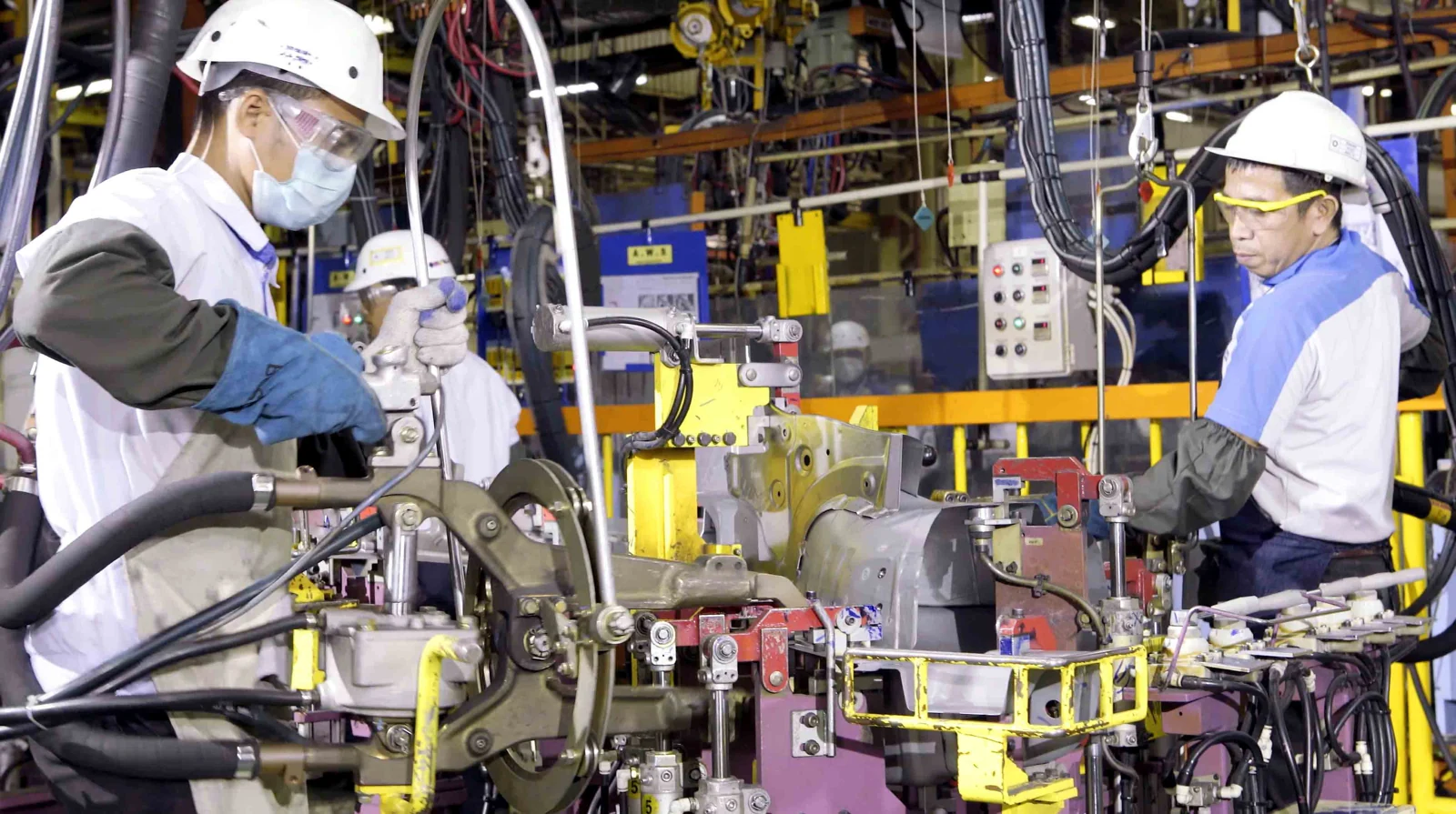
Show what you make, the applications you serve, how production works, the people and controls behind it, and what evidence supports your capability. Include the relevant facility, process, quality checks and delivery arrangements. Choose each scene because it answers a buyer’s question.
A factory tour becomes useful when the viewer knows what to look for
A wide shot of a busy production floor establishes scale. It does not, by itself, explain which products you can make, how you manage variation or whether your operation suits a buyer’s requirements. Help the viewer interpret what they see.
This guide is for Malaysian manufacturers, marketing and corporate-communications teams preparing a film for customers, procurement teams, exhibitions, investors or recruitment. It applies across sectors, but the proof must be specific to the actual facility, process and audience.
From factory footage to buyer understanding
- Buyer questionWhat does this viewer need to assess?
- Visible evidenceWhich approved process, person or record helps answer it?
- MeaningWhat can the viewer reasonably conclude?
Agree who needs the film and what decision it supports
A potential customer needs a different explanation from an investor or a job applicant. Agree the primary use first, then identify where shorter versions or different openings would help.
| Audience | Likely question | Prioritise |
|---|---|---|
| Engineering / technical buyer | Can this operation meet the required specification? | Relevant processes, materials, equipment applications, testing and engineering support. |
| Procurement / supply chain | Can this supplier deliver reliably within the agreed scope? | Planning, traceability, communication, packing and dispatch arrangements. |
| Investors / partners | How does this capability support the business? | Business model, markets, capability and verified operating information. |
| Talent / employees | What will it be like to work here? | Real roles, learning, people, working environment and approved practices. |
Eight elements to consider in a manufacturing corporate film
- Products and applicationsMake it clear what the business manufactures and where those products are used. Show representative outputs that the company can disclose. Distinguish a capability demonstration from a product currently in commercial production.
- The production routeHelp the viewer follow the relevant sequence: inputs, transformation, checks and finished output. Use accurate labels and an approved order. You do not need to reveal every process parameter to explain the capability.
- Engineering and technical capabilityShow the people and tools involved in design support, tooling, setup or process development where these genuinely form part of the offer. Explain what a specialist activity contributes rather than relying on machine names alone.
- Quality assurance and verificationChoose an actual inspection or test and explain its purpose. Confirm what is checked, against which requirement and who can approve the explanation. One inspection shot does not establish a company-wide quality claim.
- People and responsibilitiesShow the expertise behind production: operators, engineers, quality personnel and supervisors. A short, specific explanation can make an otherwise anonymous production scene understandable.
- Capacity, flexibility and coordinationOnly use current, approved figures. Distinguish installed capacity, typical output and available capacity; they are not interchangeable. Explain relevant flexibility without promising every order can be accommodated.
- Packing, logistics and customer supportWhere relevant, show how completed goods are identified, protected and prepared for dispatch, and how the customer receives updates. Use the actual agreed service scope.
- A clear next stepTell the viewer what information helps assess fit: product requirements, drawings where appropriate, application, expected volume, timing and contact. Make it easy to start a useful enquiry without requiring a complete specification on the first visit.
Match every important claim to something the viewer can understand
| Broad claim | More useful evidence | Confirm before filming |
|---|---|---|
| “High quality” | An explained inspection or test relevant to the product. | Method, acceptance criteria, terminology and permission to show results. |
| “Advanced technology” | The machine or system performing a meaningful task. | What capability it enables and which claims the technical owner supports. |
| “Reliable supply” | A real planning, identification or dispatch sequence. | Which arrangements are standard, project-specific or conditional. |
| “Flexible production” | An approved example of a variation, setup or product range. | Limits, lead times and any process details that must remain confidential. |
| “Certified operation” | The relevant certificate and the activity or site to which it applies. | Current validity, scope, entity, site and permission to display marks. |
| “Sustainable manufacturing” | A specific documented initiative and a precisely scoped statement. | Source, reporting period, measurement boundary and reviewer approval. |
Visual evidence and documented evidence do different jobs. A film helps someone understand a capability; it does not replace technical qualification, supplier assessment or a site audit. Keep the supporting information available for the next conversation.
PurplePerfect working method / Brand Association Map
What should a buyer associate with your operation?
Words such as “reliable”, “innovative” and “world-class” are easy to put in a script. They become useful when the audience can see what those words mean in your operation. Start with the association you want to earn, then find the process or behaviour that supports it.
| Intended association | Evidence to investigate and explain |
|---|---|
| Reliable | Inspection checkpoints, control of non-conforming output, maintenance and release responsibilities. Explain which requirement is checked and what happens when it is not met. |
| Technically capable | Engineering decisions, tooling, testing or a demanding application. Explain the problem being solved; a close-up of advanced equipment alone does not establish capability. |
| Responsive | How a change request reaches the responsible team, how feasibility is reviewed and how the customer is informed. Do not imply a response-time guarantee unless it is supported and approved. |
| Consistent | Documented checks, traceability, operator competence and the actual controls used to manage variation. A tidy line is context, not proof of consistent output by itself. |
| Responsible | Specific, current practices within the site's scope. Environmental or safety claims need their own evidence and authorised wording; attractive facility footage is not a substitute. |
The visual treatment should help people follow that evidence. Controlled pacing, readable labels and well-recorded explanations can support a professional impression. They cannot establish a certification, manufacturing tolerance or performance outcome that the company has not substantiated.
A useful recce question
For each proposed scene, ask the Operations or Quality lead: “What will the buyer understand from this, and what might they incorrectly assume?” That second question often identifies the caption, qualification or extra shot the film needs.
Explore manufacturing work in the PurplePerfect portfolio
Different operations need different explanations. These public films offer relevant viewing references. The planning prompts below help you assess what your own film should explain; they do not claim that every listed process was part of those projects.
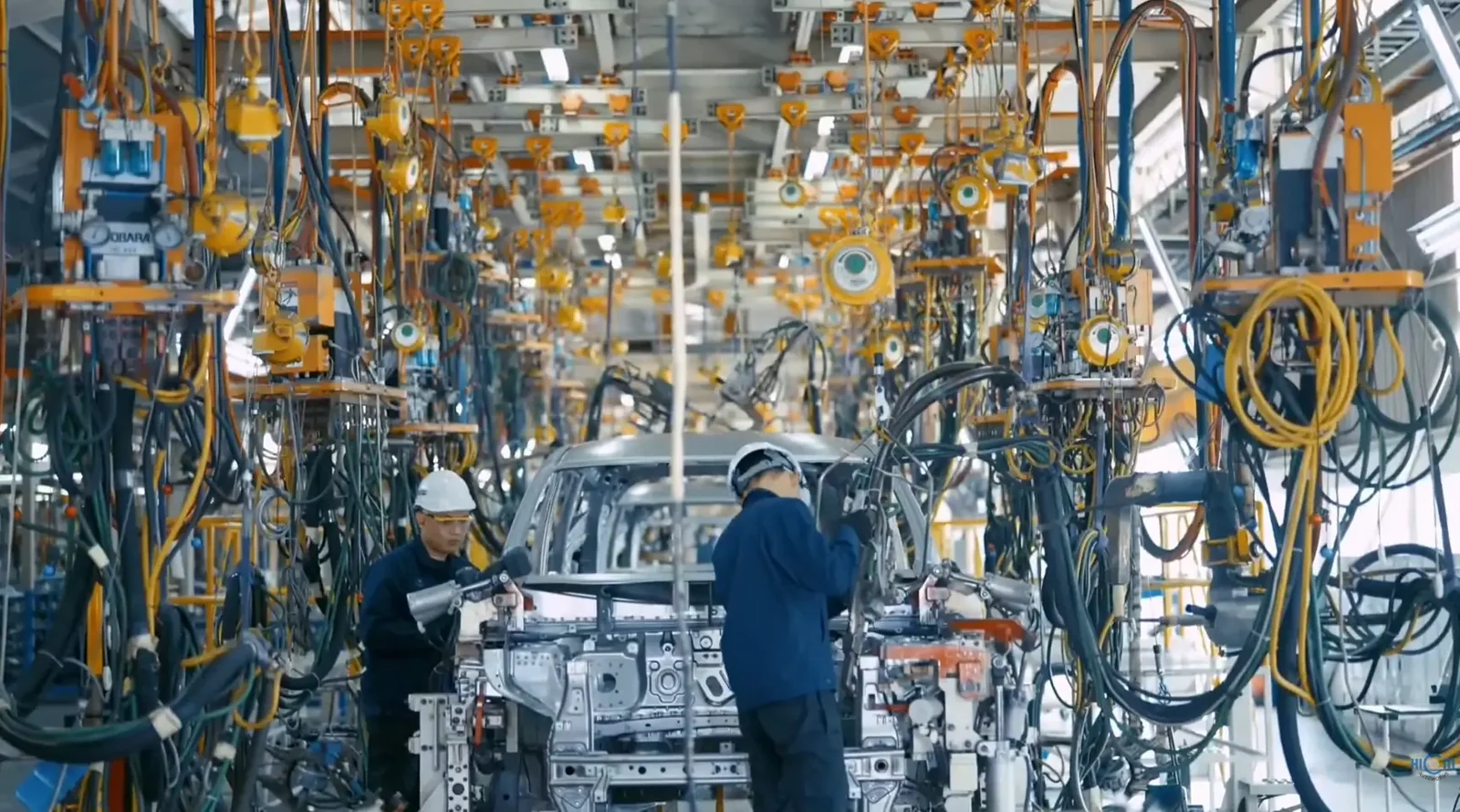

PHN Industry
Automotive manufacturing. Ask how your film will explain the relationship between equipment, process and finished components.
Watch the public PHN film ↗HICOM Automotive
Automotive production. Consider which stages give the viewer a coherent understanding of the operation.
Watch the public HICOM film ↗PS Poly Pack
Packaging manufacturing. Consider how to connect product types and production capability to the customer’s application.
Watch the public packaging film ↗Food Empire
Food manufacturing. Consider how to explain the relevant production environment without implying unverified quality or compliance claims.
Watch the public Food Empire film ↗Plan the shoot around the operating facility
A useful recce involves Operations, the relevant technical owner, the site’s safety representative and the production team. Confirm the real sequence and its timing. An impressive process that will not run on the filming day cannot be rescued by a vague shot list.
- Access and scope: agree permitted areas, escorts, crew induction, site rules and an approved filming plan.
- Operations: confirm production windows, changeovers, maintenance and what must not be interrupted for the camera.
- Confidentiality: identify customer information, drawings, screens, batch labels, tooling and restricted processes that must not appear.
- People: confirm contributors, language needs, permissions and the person who can review actions and terminology.
- Image and sound: assess noise, lighting flicker, reflective surfaces, sightlines and whether speech belongs in a quieter location.
- Approved behaviour: film only actions and controls the site authorises. Never remove protection or stage an unsafe shortcut for a cleaner shot.
- Contingency: agree alternatives if a process, person or area becomes unavailable.
Give the film a sequence a buyer can follow
A useful starting structure is: the customer application, the capability required, how the operation delivers it, the evidence behind the claim, and the next conversation. Adjust it to your purpose. A recruitment film or investor film will need a different emphasis.
Use graphics when they make a relationship visible: a production route, product application, process stage or location. Label animated or illustrative material clearly when it could otherwise be mistaken for footage of the actual facility. Technical owners should review explanations before animation becomes expensive to change.
Record interviews when a person can explain a decision or consequence that the pictures cannot. Use the interview case collection to plan questions, eyeline and supporting coverage.
Worked example / illustrative inspection sequence
Build a 60–90-second explanation around one real process
Instead of trying to summarise the whole factory, imagine one sequence that explains a component inspection. The duration is a planning example; the actual process and audience determine the edit.
Application / Why this component matters
Identify the product and its intended application without disclosing restricted customer information. Explain the requirement the audience needs to understand.
Method / How the requirement is checked
Show the genuine measurement or test. Frame the operator, component and instrument so their relationship is clear. Use an accurate label for the step.
Interpretation / What the result means
Let the responsible person explain how the result is assessed against the agreed requirement. Blur or substitute approved demonstration data where confidentiality requires it, and label a demonstration as such.
Control / What follows the result
Explain the actual review, segregation, rework or release route that applies. Do not stage a pass or suggest that one successful test represents all output.
Customer relevance / What to discuss next
Connect the process to the buyer's requirement, then invite a technical capability discussion. Keep the video useful without presenting it as a substitute for qualification, audit or detailed specifications.
Keep a claim register alongside the shot list
For every material claim, record exact wording; source document or owner; facility/product scope; relevant date; permission; approved screen treatment. For “batch traceability”, for example, establish which products and records the claim covers before filming labels and system screens. Do not invent a percentage to make the scene sound more persuasive.
Ask the technical reviewer to check facts and the communications reviewer to check clarity. Give one person responsibility for resolving conflicting comments. This avoids an edit that is visually approved but technically ambiguous.
Plan how the film will be used after delivery
An exhibition may need a version that works without narration. A sales meeting may need a complete explanation. A website introduction needs a relevant next link. Social cutdowns need their own framing and opening. Confirm those uses before the shoot.
For BM, English, Mandarin or other language versions, agree a technical glossary, who checks translations and how text changes will affect graphics. Plan future updates for capacity figures, certifications, facilities and products. Keep version names, release dates and source owners clear.
A suitable brief also specifies filming days, site access, interviews, animation, subtitles, aspect ratios, revisions, usage rights and delivery formats. Use the budget guide and timeline guide to make those choices concrete.
Use the same evidence differently for Engineering, Procurement and management
Can this process meet our requirement?
Give more attention to materials, methods, constraints and verification. Explain terminology and connect the demonstration to the relevant application.
Is this a credible supplier to evaluate?
Clarify capability, site and certification scope, relevant experience and the route to supporting documentation. Avoid presenting a film as supplier approval.
Why is this capability commercially relevant?
Explain what the operation enables for customers and how that fits the company's position. Use fewer process details, while retaining the evidence behind the conclusion.
Why should I stop and talk?
Assume someone may join midway through playback. Use understandable standalone sequences, readable text and a clear product application. Check the film without sound on the intended display.
These needs may be met through one clear master film and a small set of useful extracts. Commission separate versions when the explanations or viewing conditions differ materially, not simply to increase the deliverable count.
The Brand Association Map and deployment approach come from the supplied Ultimate Brand Marketing Arsenal, Volume 2 and PurplePerfect Video Converts (brand associations and asset deployment). This guide applies those practitioner methods to manufacturing communication; examples are not assertions about any named client's operations.
Prepare your manufacturing-film brief
Capture the decisions you can make now and mark the rest for discussion. These answers stay in this tab; download a copy before leaving.
Manufacturing-video questions buyers ask
How long should a manufacturing corporate video be?
Choose runtime around its use and the explanation required. A short introduction and a technical capability presentation are different deliverables. Agree what a viewer must understand, test the sequence, and remove detail that belongs in a specification sheet or a separate film.
Can we film while the factory is operating?
Potentially, subject to the site’s approval, production conditions and filming plan. Coordinate access, escorts, safe positions, noise, interruptions and restricted information with the responsible facility team. The film schedule must respect the operation.
Should we show every machine?
No. Select equipment and processes that demonstrate relevant capability. Explain what they contribute. A long machine inventory can obscure the point unless the audience specifically needs that level of detail.
Can we create the film internally?
An internal team can produce focused updates when it has the skills, access and review support. A broader corporate film may benefit from specialist story development, operational filming and versioning. Decide around the required quality, complexity, available time and responsibility for delivery.